
Hawaiian bird archive · Native forest birds
Kauai Amakihi
Chlorodrepanis stejnegeri · Kauaʻi ʻAmakihi
The Kauaʻi ʻAmakihi may hang underneath a branch, turn upright to probe a crevice, then move to an ʻōhiʻa blossom. Its strong feet and substantial curved bill serve all three stops.
View the photographs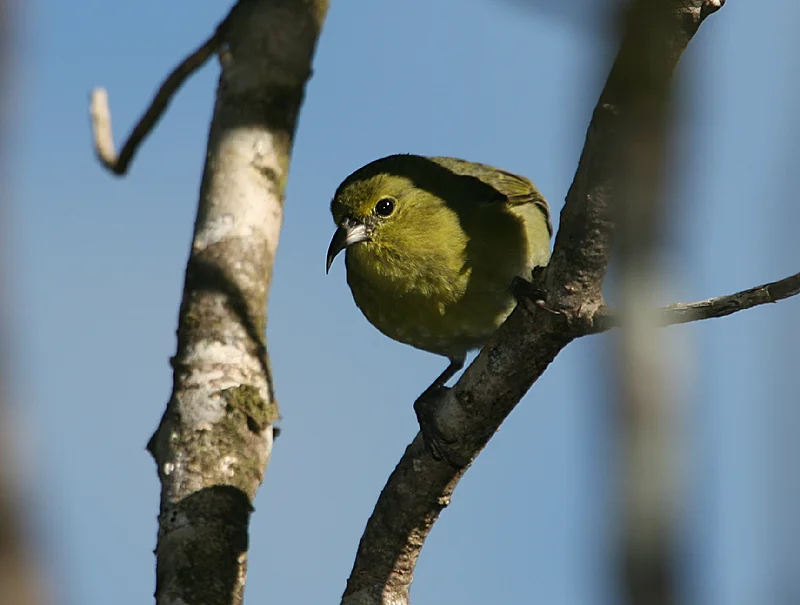
- Scientific name
- Chlorodrepanis stejnegeri
- Family
- Fringillidae
- Island in this gallery
- Kauaʻi
- Habitat
- Native upland forest
A sturdy bill in profile
Among the ʻamakihi, the Kauaʻi species is the largest, with a heavier bill and a conspicuously downturned tip. The male has dark feathers between the eye and bill, above yellowish underparts. Females tend toward olive. Compare it with the much smaller ʻAnianiau on the same island and the difference in bill size is especially clear.
Checking the underside of the branch
Holding on with strong claws, an ʻamakihi can turn upside down to search for small prey. It also probes crevices in the bark, takes fruit and pierces the bases of ʻōhiʻa flowers to reach nectar. A single tree can give it several quite different reasons to linger.
Nesting in ʻōhiʻa
Pairs usually choose an ʻōhiʻa for their nest. The female does much of the building and incubates the eggs. A singing male nearby may be her mate. After hatching, both adults deliver food to the chicks.
An island of its own
Kauaʻi birds once appeared in field guides as part of the widespread common ʻamakihi. The Kauaʻi ʻAmakihi is now recognized as a species in its own right. Its remaining habitat is concentrated in upland forest, and long-term island surveys have documented a sharp fall in numbers.
Oahu Nature Tours photographic archive
4 photographs of the Kauai Amakihi
Kauai
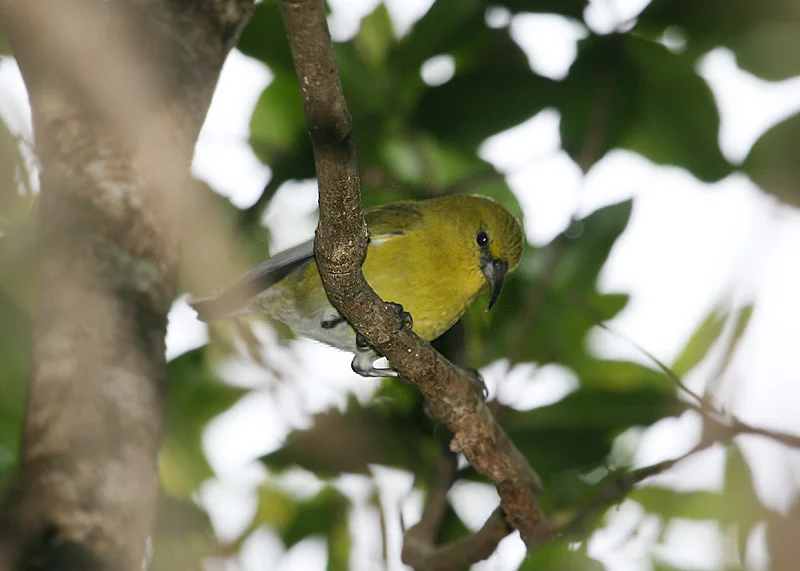
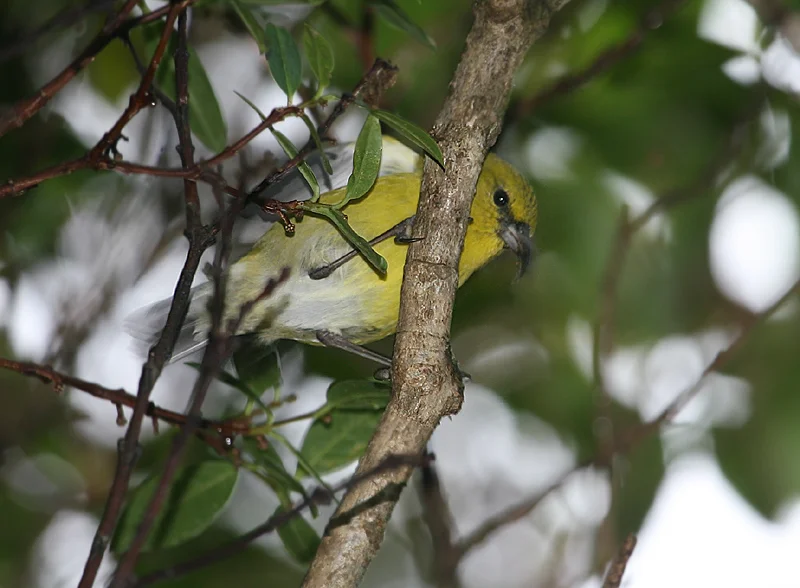
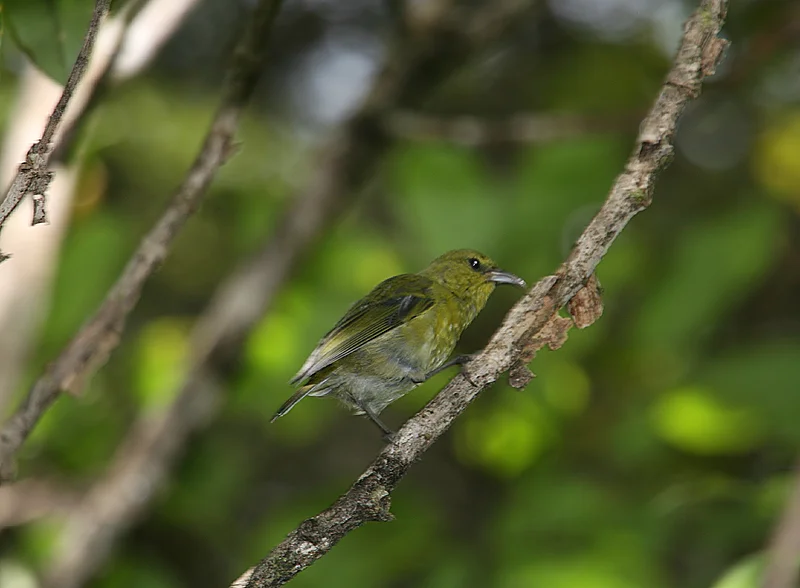
Photography by Michael Walther · © Michael Walther. All rights reserved.