
Hawaiian bird archive · Native forest birds
Maui Parrotbill
Pseudonestor xanthophrys · Kiwikiu
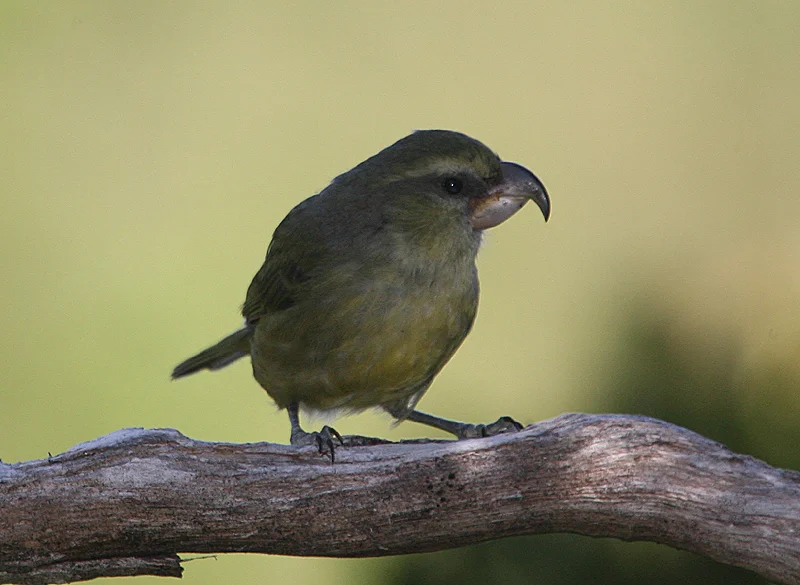
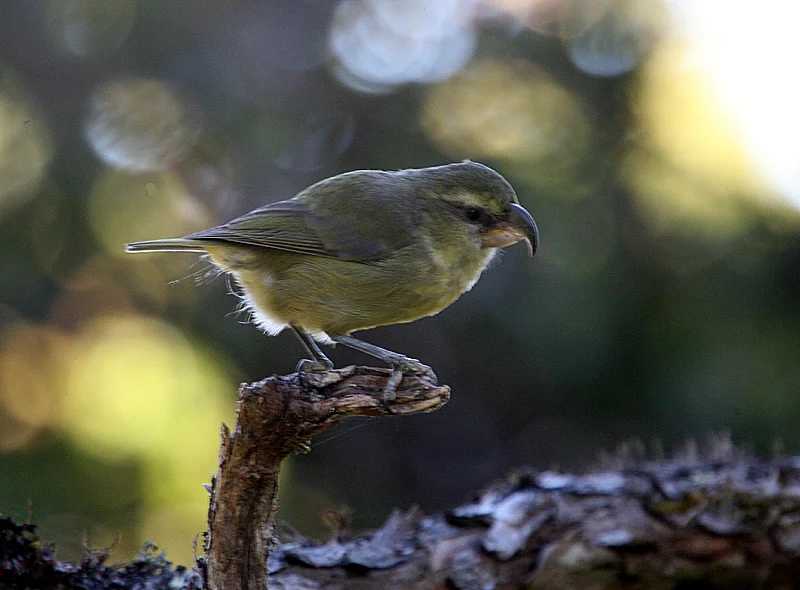
That heavy bill can make a Kiwikiu look almost top-heavy on a slender branch. Watch what it does with the bill and the proportions make sense. This Maui honeycreeper can split wood to reach an insect larva hidden inside.
View the photographs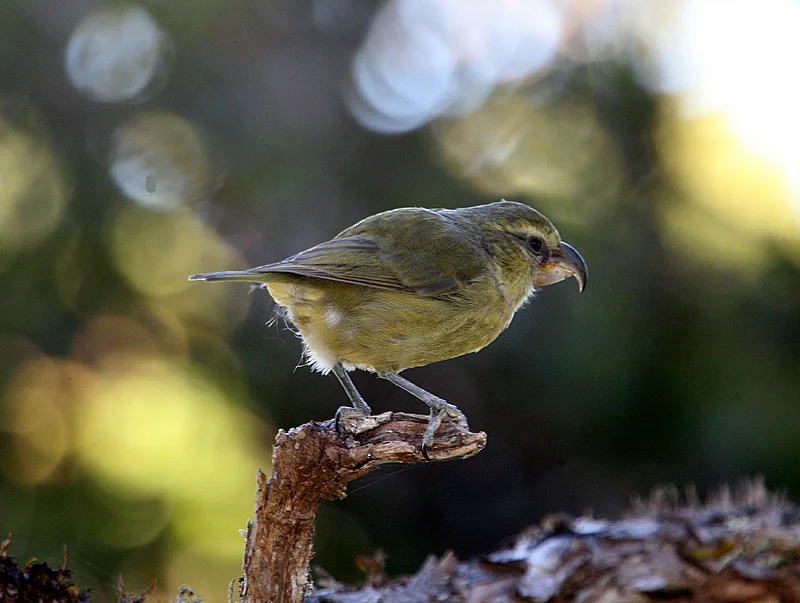
- Scientific name
- Pseudonestor xanthophrys
- Family
- Fringillidae
- Island
- Maui
- U.S. status
- Endangered
Two names for the same bird
Michael cataloged this bird as the Maui Parrotbill. In 2010 it received the Hawaiian name Kiwikiu through the Hawaiian Lexicon Committee. Both names lead to the same stocky honeycreeper, with its short tail, yellow underparts and pale stripe above the eye.
What is inside the berry?
A bird opening a berry may be after the grub in its flesh. Kiwikiu also lever apart small branches and probe bark. Their feeding marks tell a different story from the visits of nectar drinkers to flowers in the same forest.
Learning a difficult way to feed
A pair typically raises a single young bird every year or two. A youngster can stay with its parents for more than a year as it learns to extract food. That long apprenticeship helps explain how slowly a population can replace birds it loses.
A much smaller island range
The species once occurred on both Maui and Molokaʻi. Its surviving wild range is in a small area of Maui’s high native forest. Recovery crews track the birds and work to reduce predation and disease carried by introduced mosquitoes. The archive offers a close look at a bird few people encounter.
Oahu Nature Tours photographic archive
3 photographs of the Maui Parrotbill
Maui
Photography by Michael Walther · © Michael Walther. All rights reserved.